Showing posts with label children's books. Show all posts

Thursday, May 21, 2015

Summer To-Read Pile (#1)

This weekend marks the unofficial beginning of summer.  All those hours relaxing by the pool: hat, sunglasses, nice cold sweet drink, while the kids frolic happily on the way far other end.  Those days lazing on the beach, toes in the sand.  Those cool evenings, swinging in the hammock.

(Or more likely...) The mornings, afternoons, and evenings sitting poolside waiting for your swimmer kid to finish his one event in the 3-hour meet, running your own kid camp - summer school - sports practice - Vacation Bible School - friend's house bus route, or trying to keep one eye on your kid who just ran to the far other end of the playground and hoping you don't get arrested on suspicion of being a free-range parent.

Whatever the summer plans, we still have our to-read pile. That stack that - if the sun aligns just right with our sweet tea - we'll be able to get through by the end of August.  Here's the start of mine (more to be added, of course) - and a warning if you've never read my to-read pile selections before - I'm not promising I actually know what the book is about. It's either been recommended to me by someone I trust to make a good book selection or the cover and/or title is intriguing.

Everything I Never Told You, Celeste Ng
"Lydia is dead. But they don't this yet." That's the first line - what else do you need?

The Girl on the Train, Paula Hawkins
Keep seeing it on must-read lists, so well, I guess I have to read it.

The Sleepwalker's Guide to Dancing, Mira Jacob
This just sounds like a fun title.

Queen Bee Moms & Kingpin Dads, Rosalind Wiseman
What happens to those middle and high school mean girls when they grow up?


Children's Books
I generally don't read too many children's books for myself, but I have picked up these two.  They happen to be free verse novels - stories told in a series of poems. Note too, if you are looking for diverse books - these are both African-American authors.

The Crossover, Kwame Alexander
Alexander was the guest reader for my school's PTA Family Reading Night.  My high schooler (my avid reader and basketball player) read it and loved it, though it's written for a younger age, so it's a good intro to poetry for the little people.

Brown Girl Dreaming, Jacqueline Woodson
I read so many "must read" reviews on this and then realized it was a children's book. It's a memoir of the author's childhood in the 1960s and '70s.


Still looking for more suggestions - what's on your summer to-read list? 

Join the conversation on Facebook: Just Piddlin' with Frances
*and keep up on my reading pile on Goodreads

Friday, November 21, 2014

Youth Financial Literacy & Entrepreneurship: Watching Seeds Grow


When we consider education, we focus on our children being well-read, able to figure out the area of a triangle, knowing who won the Civil War, and knowing what Ag stands for on a periodic table.  We provide little formal education on how to make money and what to do with that money once you have it.  But as a former business education teacher and a parent, I’d argue that financial literacy is just as important to our children’s success.  Or least, for us to successfully get them out of our house as functional, independent adults (the whole goal of parenthood, right?)

What I learned about money (at least before I went to college and actually majored in finance) was from my parents, with money earned through part-time jobs and allowance.  As a teenager, I babysat.  Many of my girlfriends did the same; the guys cut grass and shoveled snow.  We told people we were available to do the work, decided the fee, did the work, collected payment, and figured out what to do with all that money.  We didn’t think about it then, but these tasks are the essentials of being an entrepreneur.  I’ve reviewed the same steps with my little group who are involved in one of the largest youth business operations around – my Girl Scout troop and their cookies.


Watching Seeds Grow is a guide about entrepreneurship for young people written by son and father, Keith Greer and Peter Greer (President & CEO of HOPE International), which offers simple, easy-to-understand lessons for youth about financial management.

The book opens with a few stories of youthful entrepreneurship, starting with Keith’s (the son) haphazard beginning in business, selling beans in a Rwandan market when he came across a few handfuls of leftover beans.  The stories highlight product-related businesses (beans, candles, tacos, donuts), but children should also be reminded that service-related endeavors, such as tutoring, shoveling snow, and painting friends’ nails, also require the same steps.

The second part of the book lists for parents ten steps of entrepreneurship.  Even for the child who has no interest in running their own business, they are important lessons which can be scaled to the appropriate age: understanding finance and the concepts of hard work, ownership, investment, and generosity.

For instance, Step 2: Start a Savings Account.  For the youngest child, the parent can begin this lesson with a simple bank at home – a jar, a plastic piggy bank, an envelope – and the discussion of putting away a little bit of whatever money the child gets for birthdays or holidays or A’s on the report card to save for the future.  Perhaps start with a tangible goal, like a particular toy or activity that’s relatively expensive, but reasonable.  As the child gets older, you can discuss more about short-term (that new iPhone) and long-term (college) savings goals.  Additionally, as the child gets older, parents can introduce them to the process of putting their money in the bank and earning interest (even if it is just a little bit), and then later the concept of investing (Greer’s Step 6).

An interesting parenting issue which Greer includes in the discussion on teaching children the value of hard work, is the debate about allowance.  Should allowance be tied to chores or other required activities or should it be given, no strings attached?  Greer suggests that by relating allowance to chores, parents teach children the concept of working for their money. Parents might even offer the opportunity to do additional chores to make a few more dollars.

The last section of the book is worksheets for the child who is considering their own business, even as simple as their own lemonade stand.  Applying the ten steps of entrepreneurship, the worksheets lead the child and parent through developing a business concept, considering expenses and setting a price, planning marketing and promotions, and selling the product.

Watching Seeds Grow is an easy-to-read guide which breaks down information about financial management into tangible, actionable steps for the young entrepreneur, the kid working a part-time job, or the kid getting an allowance for taking out the trash.

Peter and Keith Greer, Authors of Watching Seeds Grow

A complimentary copy of Watching Seeds Grow was provided for review; all opinions and comments are my own.


Join the conversation on Facebook: Just Piddlin' with Frances

Friday, November 14, 2014

Diverse Books for the Kids from Scholastic Bookfair

I've survived another week of the school Scholastic BookFair.  Five days of running the little temporary bookstore in the space now known, again, as the Media Center.  Along with spending the day as book-seller, its a unique look into the normal school day.  Every class and every student comes through the book fair.  Talk about getting to know your kid's school.  Add to the fun by dressing in costume with the theme of the fair - I managed to get away with walking around the school all week and attending my parent/teacher conference in a long red cape and crown.  Don't miss the fun - you should volunteer for the school book fair. (And I'm not just saying that as a plug for my 2015 team.)

While stocking, searching for, and selling books, I always end up with a pile of books for my own kids.  Of course, there's the new Diary of a Wimpy Kid (somehow our book fair is always timed to the release of the newest book so there's that madness), some LEGO or airplane building guide, and some princesses or fairies.  This year we also picked up Lucky Dog, a book about rescued dogs; this because the dog on the cover looks like our own lab/shepherd which we adopted from Lucky Dog Rescue.

As I've said in previous posts (like Where Does My African-American Child See Herself in Books), you know I've always got my eye out for books that reflect diversity, especially in a "normal kid" kind of way, going through whatever experiences kids go through.  Here's what we found this year.

What does Kennedy's assassination and integration look like from the eyes of a young Black girl?Kizzy Ann Stamps is a young girl in the early 1960's.  Her neighborhood schools are about to be integrated, which means she has to leave the school she's been attending and her Black teacher to the new integrated school with a new White teacher. And she is not too happy about this change in her life.  To ease into the change, her teacher suggests that she write a letter to her new teacher to introduce herself.  The book is told through her continued letters and then, when her new teacher gives her a journal, entries in there.   


The Mighty Miss Malone: Men and women, dads and moms, do what they can to take care of their families. Sometimes that means moving to a new city for a new job, but not necessarily as a whole family all at once.  This is Deza Malone's family's journey through the Great Depression.  The timing and picture of the little girl with braids on the cover makes me think of my own aunt and makes me want to know her story.  Written by Christopher Paul Curtis, award-winning author of The Watsons go to Birmingham and Bud, Not Buddy.

The Great Wall of Lucy Wu: What if your grandmother's aunt came to live with you as you get ready for sixth grade? Add to that, she is going to be your new room-mate.  And while you're trying to be a regular kid, your family continues to follow Chinese cultural traditions and make you go to Chinese school.  The premise of the story just made me laugh, and not just in a typed "LOL" way, but for real laughing out loud.

Jump Into the Sky: In post-WWII 1945, Levi sets out towards a southern Army base in search of his paratrooper dad. I anticipate that it will be an interesting historical fiction: 1945, traveling through the south, Black soldiers, and a teen Black boy.  And I would expect there are some interesting coming of age issues, as well.  I picked this one up for my son. 

Happy reading!  And when you're done, let the kids read, too.


Join the conversation on Facebook: Just Piddlin' with Frances

Wednesday, March 19, 2014

#ColorMyShelf - Diverse Books for All Kids

Author Walter Dean Myers wrote an article, Where Are The People of Color in Children's Books? in the New York Times about the lack of diversity in children's books. This isn't new news, as I posted about this last year, with a chart from First Book, illustrating that 93% of the children's books published in 2012 featured White children; all other racial categories accounted for the remaining 7%.  In 2013, The Cooperative Children's Book Center counted less than 300 books about children of color of the 3200 they reviewed (with an estimated 5000 books actually published).

Myers' article, however, did spawn a new Twitter hashtag #ColorMyShelf.  If you scroll through, you'll find mentions of books featuring children of various races and cultures, as well as the call for more diverse books.

And you'll find, if you haven't noticed already, that many "multicultural" books are for younger kids - pre-school up to elementary age. Many explain a particular culture - about "nappy" hair or how to use chopsticks or a grandmother's kimono or how to light candles for divali.  Many of the African-American books, for example, are about historical figures, African-American culture post-slavery, or retellings of African folktales. We have several of them on our family bookshelf.

There are few, however, where the kids are going about their own little kid business - falling into rabbit holes or eating fried insects or pestering their little brothers - and just happen to be African-American or Chinese or Mexican.  It's as if the subtle message is "children of color are people for little kids to learn about, they don't lead normal lives."

Books for older readers seem to have even less diverse characters. My high-school daughter reads a lot.  By a lot, I mean she wanders through the library and bookstore, picks up five books at a time and will read them, barring a Physics exam, within the week.  Books about kids who turn into birds, kids with crazy scientists chasing them, mean girls, kids dying of cancer - all of that, in addition to her school assigned reading.  I've asked her how many have Black characters. She laughs as she reports that none of them do.  Well, accept Rue and Thresh and their neighbors from the Hunger Games.

Remember the surprise/shock/outrage when Rue was cast as Black (as described in the book)?  On one side of the aisle, folks fumed about this Black character who dared to show up and not be there to teach us about how to take care of curly hair?  On the other side, folks cheered that there on the big screen was a cute Black girl who wasn't poppin' gum with her hands on her hip carrying a baby.  There didn't seem as much outrage that Thresh was also Black; maybe people expected that or didn't mind the fighting boy to be Black.  (We won't even get into why the people of Rue and Thresh's District were picking cotton, we'll save that for another day.)  And then what was the next book with a regular kid who just happened to not be White?  .... Right.

So, what? Why does it matter? It matters because as much as reading is about falling into another world, time, life, story, it's also nice to encounter a diversity of characters, just like in real life. For children of color, it's an affirmation to see children like themselves doing normal kid stuff, not only running away from slavery or helping a grandmother cook a family recipe handed down through generations.  For White children, it's a statement that these other kids do normal stuff, too, not just celebrate special holidays and show off their cultural costumes. Diversity in books emphasizes the commonalities of all people and teaches us that we all want the same things - love, friendship, family, security, happiness.

Then, what? How do we get more books with children of color?  Well, someone has to write them.  Good books that kids will enjoy reading, about kids doing kid-stuff.  And other people have to support these writers by buying their books for their children and sharing them with their friends.  We have to post and tweet about books as much as we do about the Real Housewives and celebrity "news." We have to make reading entertaining and not-nerdy.  Simple, right?

I've reviewed on this blog a few books about children of color doing normal stuff.
Take a look and share them with your kids. And share any other recommendations in the comments below.

Join the conversation on Facebook: Just Piddlin' with Frances

Friday, January 3, 2014

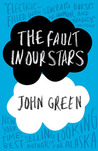
Books I'm Carrying Around: Bad Monkey & Fault In our Stars


The Book I’m Carrying Around

This year, I will let you, my fellow readers, know what I’m reading at the beginning of the month.  Hopefully, it’ll be something that you’ll enjoy, as well, and you’ll join me in reading and discussions (on Facebook or on the blog) through the month.  I just finished Amy Tan’s Valley of Amazement, and after that emotional journey, I wanted to find something a bit lighter and happier.  Combing through my pile, I found that I don’t have that many in that category.  Anyway, to kick off the year, I’m reading two books this month.
The first, from my to-read pile - Bad Monkey by Carl Hiassen. Yes, I am a fan of his twisted humorous crime novels. They're the kind of book that makes you feel bad for laughing at what’s supposed to be a serious situation.  This one is about an ex-Miami, now-Key West cop who winds up in the possession of an arm (with un upraised middle digit) from a recently demised man, hooked by a fishing charter boat patron.  I know, it doesn't sound like it would be funny, but after a long day, kicked back with a glass of wine, it’s a guilty pleasure.
The second, as recommended by my 14-year old daughter for being “such a good book” that I HAVE to read it, is John Green’s The Fault In our Stars.  You'll find it on the Young Adult shelves, not where I usually get my books, but I think it would be good to take a peek at my daughter's reading interests, as well as read a highly acclaimed novel.  (Win-win.)  “Oh,” she warned me, “it might make you cry.”  This, after I wiped away a few tears having completed chapter 1.  “Especially the end.”  Yes, a story about a teenage girl battling cancer just might do that.  But, I HAVE to read it. So, I am.

Join me?

Join the conversation on Facebook: Just Piddlin' with Frances

Book I'm Carrying Around: The Supadupa Kid


Getting your kids to read is much easier when they find a book they like.  And they seem to want to read books where they like the characters.  My son suggested that I should mention The Supadupa Kid by Ty Allan Jackson on my blog because other boys would really like this book about a boy who gets cool superpowers.  And a supersuit.  What else could a boy want?

Twelve-year old Javon is a normal kid – he goes to school, is pestered by his little sister, and lives with his mom and dad.  Until one rainy day, by a freak accident of getting struck by lightning, he gains super powers.  He can fly and shoot lightning from his hands!  Unfortunately, the neighborhood bully was also struck by that same lightning, and he also has superpowers, now, too.  Javon and his sidekick friend (every superhero’s got to have a sidekick), use his powers for good, saving the neighborhood from bad guys, retrieving cats from trees, and fighting the school bully. The story is told from Javon’s point of view, as if a friend is talking to you, and intermixed with comic strips that summarize the chapters.  He experiences some angst and excitement about being a kid, with a little crush on a cute girl at school, and about being a superhero.

My son picked up The Supadupa Kid at the Baltimore Book Festival and was reading it by the time our car hit the highway on our way home.  He said to be sure to write here that he couldn’t put it down. As a normal kid, with a pestering little sister, and grand imagination, I think he found kinship with Javon. I heard him laughing as he read and a couple days later, he concluded that it was a good book.  Pressed for more details, he looked at me in the way little boys look at their moms, and said, “It just was a good book.”  Well, the boy is reading and enjoyed it.  What else could a mom want?

Get your super-kid's copy at www.bigheadbooks.com.

Join the conversation. Like us on Facebook: Just Piddlin' with Frances

Wednesday, November 13, 2013

Let Me Be Nice How I Want to Be Nice

Today was Kindness Day and I really did try to be kind, but some folks wouldn't let me. Not in the way I wanted to anyway.


This is my week in the school book fair, as I mentioned yesterday, offering some parent tips for the kids' literary shopping sprees.  Today, a little girl came to the book fair and was so sad that (a) we were out of the diary-style book she wanted and (b) she didn't have enough money for a book anyway.  Then she got all "I thought this would be the year I got a book" and I felt like I was in a scene from the A Christmas Carol.  I told her to pick any book - any chapter book / book with paragraphs and bring it to me.  She cried, no, no, she didn't want that, she wanted the diary book and no other book would do.  Well, given (a) and (b) above, that wasn't going to happen.  Again, I offered (c) get a book to read.  No, there was no other books on all the shelves that she liked, but these light-up pens would do.  I sent her on back to class, empty-handed.

Yeah, I applied my own values on this kid via my wanna-be charitable effort.  I like reading books and that's all I was willing to give.

When you give - whether to charity, your church (or other religious institution), or the guy standing on the street corner - do you have stipulations on how your money should be used?  Although I felt bad for the little girl, I figured, if I'm going to get this book for you, it's going to be what I want you to have.  Right?  I know I'm not the only one, because I've heard people say that they would buy a homeless man a sandwich, but not give him $5.  Why? Because, they want to give a sandwich, not money to do with however he pleases (i.e. like buy a bottle of ripple).  And not just individuals, we do this to organizations, too.  We do this in church, not giving to the building fund until we see some bricks stacked up by the pulpit.  We earmark our alumni donations to our college or our favorite sport (in a winning season).  We figure its our's to give, we'll give as we want.

Is that the right way to give? Or once we deem a person, organization, or cause to be in need of our help, should we just give freely, without stipulation?


We're counting down to #GivingTuesday and reflecting on how we do and can give back to our community.  Let us know in the Comments below. 


Join the conversation on Facebook: Just Piddlin' with Frances

Tuesday, November 12, 2013

If You Send a Kid to the Book Fair...


Today, I’m writing from my kids’ PTA book fair. It’s where I’ve been for the past 4 days, where I’ll be tomorrow. It’s my annual big haul volunteering activity – getting in a good 30+ hours in one big chunk. Then I don’t feel guilty for not making pumpkins at Halloween or helping cut hearts on Valentine’s Day.
Enter our "Oasis of Reading."
Yes, it took all of my art skills to make the palm tree in the desert.
Over the period of these five days, we’ll have about 400 kids come through, looking at books and making their wish lists.  Some portion of the kids will come back and purchase the books on their wish list, or books and items that are not.  For those parents sending in money for these purchases, here’s a few tips from my side of the cash register to make sure your kid is coming home with what you expect.

  • Review the titles of your child’s selections. Look at the book flyer or the online site, if these are available; ask your child what the books are, if not.  Many children come in with their money and buy diaries and stationary sets. That’s fine and fun – unless you intended them to come home with something to read. There are also often adult bestsellers. Not 50 Shades, but maybe a Jodi Piccoult book for the parents and teachers who wander through.  Some of them have pretty covers and interesting titles, but that doesn’t necessarily mean you want your fourth-grader reading it.

  • If you are sending a check, do send it payable to the school, PTA, or appropriate organization. Reconsider sending a blank check with your six-year old.
  • If you are sending cash, do send a moderate amount, somewhere close to the amount of their books. I can’t tell you how many kids come in with a $50 bill, purchase a $4.99 book and leave with $45 cash in their backpack. If you’re okay with that, that’s fine. Me? It makes me nervous.
  • Be clear with your child how they are to spend their money.  Are they supposed to spend it all on fun stuff like googly-eye pens and scented erasers or maybe buy a book?  Yes, you would think that if you give your kid $20, they would figure out that you expect them to come home with at least one book from the book fair. But yes, some kids will spend it all on posters, gigantic pencils, and chocolate calculators.
  • Encourage your kid to read! It’s amazing how excited the kids are when they come in the book fair. Even if you think your kid doesn’t like to read, in running the book fair for at least 4 years now, I can say there’s not been a kid who has come in and not smiled a little bit at the idea of getting a book all his own.  When they bring that new book home – whether a chapter book, graphic novel, blank diary – encourage them to read it or write in it or write something like it.  Keep the excitement going. 


Enjoy the book fair!

We're counting down to #GivingTuesday and reflecting on how we do and can give back to our community.  If you are a parent, how do you support your schools?  Let us know in the Comments below. 


Join the conversation on Facebook: Just Piddlin' with Frances

Monday, September 23, 2013

The School is Making My Kids Read Banned Books!

Given that it's Banned Books Week and I like to be in the know as to what offensive and terrible for my kids' minds books are out there, I was looking over the list of top 100 Banned/Challenged Books.  And I was shocked and surprised to find what looked like my kids' school reading list.  Did I go to the wrong site? Was I looking at the wrong list?  I had to pull out my notes from Back to School Night and check.

But there they were - right on the list of books random folks said that children should not be reading or have access to in the public libraries.

Harry Potter topped the list of books challenged in the last decade.  We haven't read it because I don't like witch-y/wizardy stories.  Although this isn't official school reading, one of my daughter's teachers said that they would be reading it to discuss plot and character development in a generic sense; she figured since most, if not all, of the kids read it, that would be easy.  My daughter hadn't read it and I really wasn't trying to fight with her to read it, because in addition to my shying away from the series, she doesn't really like to read, especially long books, so let's have this battle over required reading. Surely some other book has plot and character development.  Yes, the teacher suggested some other books - still of considerable length - she could read and still be able to add to the discussion. Wow, that was easy, without having to dictate what every other child reads.  What else you got?

Of Mice and Men, I Know Why the Caged Bird Sings, Huckleberry Finn, The Bluest Eye, Catcher in the Rye, and To Kill a Mockingbird, and The Giver.  Wait, no Autobiography of Malcolm X? I thought we could knock out my daughter's whole high school list and she could breeze through school.

And not be left out, there's a few to be left off the elementary list, too.  Captain Underpants - perhaps for partial nudity?  And the Junie B Jones series.  Oh, yeah, that girl is trouble.  Surely, she incites kids all over the country to push other kids off the playground and tease their little brothers. We can't have that.

I agree, that some of these books, perhaps should not be required school reading, for instance, the joy of any-kind-of-sex, but that doesn't mean they shouldn't be in the public library. Who are we to say what other people should read?  Remember - these challenged books are not just for school kids, they would be banned in the library - so adults couldn't read them either.  Now, yeah, if there was a 101 Ways to Wreak Havoc & Cause Mayhem book (and sadly, I won't be surprised if you tell me there is), I might agree that it shouldn't be available for free, housed in a public building, folks should have to pay their own $14.95 for such craziness.  But Are You There God? It's Me, Margaret.  I think that's a rite of passage, just as much as pimples and changing voices.

Enjoy a banned book with your child this week.

Join the conversation on Facebook: Just Piddlin' with Frances

Friday, September 6, 2013

Got Your Library Card?

One day, I was walking around the bookstore with a cup of coffee in my hand, perusing the new fiction.  As I debated which to get, I had this thought - honestly, I did: "there should be a place where I can just borrow these books and bring them back when I'm done."  Yeah, I really did think that. When the thought was complete, I almost spit out my coffee laughing at myself.  I've been a library-card carrying girl for over thirty years, so let's blame that on mommy-brain.

As a kid, our home was walking distance to the public library. This was way back when parents let their kids walk across an empty field, past a cemetery, and across a 4-lane street with their little brother in tow.  Each week, we would carry Ramona & Beezus, Henry and that dog, and Judy Blume back and forth with us.  There were afternoon programs and activities, my brother and I would sign ourselves up and then show up to enjoy them.  Sometimes our friends would come along.  We found that rows and rows of library books were a great place for indoor hide & seek when it was too cold outside - but you had to play real quietly.  When I pass by now, I point it out to my kids, "there's my library."  It was a place of happy memories, as corny as that may sound.

When I take my kids to our neighborhood library, they each make sure they have their own library card to check out their own books.  All five of us, five stacks of books, five different cards. (Only one of us, however, pays the late fines.  I hope one day I will be commemorated at least on a bookshelf or one of those teeny chairs in the children's section for my donations of 50-cents at a time over the years.)

Getting their own card was my kids literacy right-of-passage.  Before they could get their own card, they had to be able to write their name and read a book by themselves.  "Read" of course doesn't mean get through War & Peace, but at least a few pages of Cat in the Hat.  They each were so excited to get their cards. They knew the "requirements" and would practice writing their name, so it would be just perfect on their card.

There's of course, no requirement for everyone in the house to have their own library card. But it gives the kids a sense of pride, I think, to have their own.  It's their little piece of independence. Their first piece of identification that they can put in their pocket.  Having their own card is like having their own ticket to wherever they want to go.

We try to get there every few weeks or so, in between all the other after-school activities.  In addition to picking up books, we've picked up audiobooks for roadtrips and language tapes to practice our Korean. When they were little, we used to go for puppet shows and art activities.  We drop off books for the used book sales and they picked up some good (cheap) reads there, too.  Since our library is not easily walkable from our home, the kids rely on me to take them. But now the library also has e-books available so they can download them to the Nook or my iPad if they don't want to wait (or we're snowbound).  I'm glad that my kids enjoy going to the library as much as I did as a kid.

Now, if only they served coffee...


Join the conversation on Facebook: Just Piddlin' with Frances

Thursday, August 29, 2013

Tuke: the Specialist Turtle

Think of "specialist" not in the way that adults use the word, as in "she is a foot specialist," but the way kids use the word, "this is my specialist toy."  Got it?  This was my stumbling block in understanding the title, but my 8-year old got it right away. Now, you're ready to turn the page and read how Tuke realizes he is the specialist turtle.
Tuke the Specialist Turtle
We received a complimentary copy of Tuke and I had my little folks read this colorful picture book about a "tiny turtle Tuke, with long lanky fins, a pea-sized head, the neck of a gazelle and an enormous shell."  He's teased for his small size by the other sea creatures in the Caribbean reef. When he ends up in a marine study lab, he comes up with this thought that he is the "specialist" turtle.  Returned home, he tries to tell the others about his new title, only to be scoffed at again, until a whale shark agrees with him, confirming that he is the specialist and he has an important role to play in protecting their home.

Does it remind you a little bit of Nemo? Sure. But that's okay because kids love Nemo (at least mine do). And we can't remind our kids enough how each one of them is special and important, it's a message that bears repeating.

"With friends like these who needs anemones?"  That cracked me up.
Aside from the story and the message, this book does another thing well: it uses big words.  I love children's books that are challenging, but appropriate (sometimes hard, especially as they approach upper elementary and middle school, but that's another topic.)  This one, I would put on the elementary reading shelves, but it can span a few grades. Parents can read it with the real little ones and talk about the pictures - there's crabs and seahorses and whales and turtles and coral.  And older ones can read for themselves and learn new vocabulary (for spelling or definition), like carapace, brittle, mysterious, and specialist; and metaphors (how does a turtle have a neck of a gazelle) is big in elementary poetry and writing.

Tuke is published and distributed by Chowder Inc. and the Coral Reef Conservancy (CRC).  Chowder is a creative firm that specializes in travel, tourism and destination marketing. CRC is a non-profit whose primary goal is "to raise public awareness about the plight of coral reefs and their connection to humanity."  But don't worry, there's no big "come to the Caribbean" ad in the middle of the book.  Instead, it's an interesting collaboration to educate children about the environment in a way they will enjoy.  At the same time taking away a message about appreciating our own selves.


Join the conversation on Facebook: Just Piddlin' with Frances

Thursday, August 1, 2013

Diversity in Kids' Books: Twins and Island Hunters

Name a children's book, any book. Or pick up the last book your kid read.  What race were the kids in the book (assuming they were not animals or aliens or fish)?  If your kids' books are like mine, most likely those characters were White.  Maybe, by some small chance, they were Asian or Black; by a smaller chance, they were Hispanic or Native American.  Now think - what was the last book your child read that had main characters of color?  Not the side-kick friend, but the main character on the cover.  While you think, continue to read.

The diversity - or lack of - in children's books
We all like to see and read about people that look like us. Whether "looks like" means by gender or race, ability or disability, culture or heritage. It helps to validate us as who we are. It proves that we are important.  It allows us to say, "hey, I'm not the only one."  For our children, it says, "you, too, are beautiful and belong in this world."  And aside from all of that, it's fun to see and read about other people who are just like us.  My kids love "Little Bill" on TV; although the older ones may groan when my daughter turns it on, they still sit and watch it.  Its one of the few TV shows, animated at that, that features little kids that look like them and the grand-dad looks like their grand-dad. It's fun to see your own life reflected in stories.

So it is with books. And that's why I get excited when I see children's books that represent the diverse culture of our world. We have books about Black, Korean, Latino, and Aleutian children on our shelves, along with White children.

Now I've found a couple more.
Twindollicious by Natasha Danna
Twin-doll-icious by Natasha Danna is the story of twin girls who love dressing alike.  It has bright, cute pictures and younger elementary level writing.  I gave it to my 8-year old to read and for her review. She thought it was funny and a good story.  Her summary: it was about twin sisters who liked to dress alike until a new girl came to school and made fun of them. Then they didn't dress alike and everything went wrong.  The new girl lost the class guinea pig and the twins helped her find it and then they were all friends.  From a parent perspective, it emphasized how the twins were the same in that they looked and dressed alike, but were unique in their different strengths and personalities. The message I liked was knowing who you are and not letting other people tell you who you should be.  It wasn't a story that focused on race, but about growing up, and the girls happened to be brown.

The Island Hunters series by N.E. Walford
The Island Hunters by N.E. Walford is a series of chapter books I thought my son would enjoy.  First, I was impressed that it was written and illustrated by a mother of five boys!  Beyond that, the books are all boyhood adventure. There's pirates and maps and islands and brothers fussing with each other and plotting together to find treasures and running from the bad guys.  Walford includes cultural hints and historical references as the boys wander through the Caribbean and the island of Jamaica.  My son commented that there were some "vocabulary" words in the writing; he knew them, but I think it slowed him down a little bit.  If the writing is too old for your kid, it would be a fun read-together book, if your son will allow it.

Enjoy!